Q&A:
All these saints lived between the 3rd and 6th centuries. Why so long ago?
This was an important time in the growth and development of the Church. From the time of the apostles until the Edict of Milan in 313, it was the first age of Christian martyrdom. Emperor Constantine’s edict granted religious tolerance to Christianity in the Roman Empire. But prior to that, the primary means to sanctity was martyrdom—refusing idol worship for Christ’s sake and at the cost of one’s own life. While the Church has always suffered from Judas figures, once the Christian Faith became legal, a new phenomenon was possible— “lukewarm” Christianity. In response, some of the more zealous Christians sought ways to prove their love to Christ without literal martyrdom. Men and women imitated St. John the Baptist and the holy Prophet Elijah by living austere lives of prayer and labor in the wilderness. Thus, monastic life in its various forms began to develop in Palestine and North Africa. Rather than dying in the flesh, these monastics died to the world, to fame, to wealth, to comfort, and to self-will.
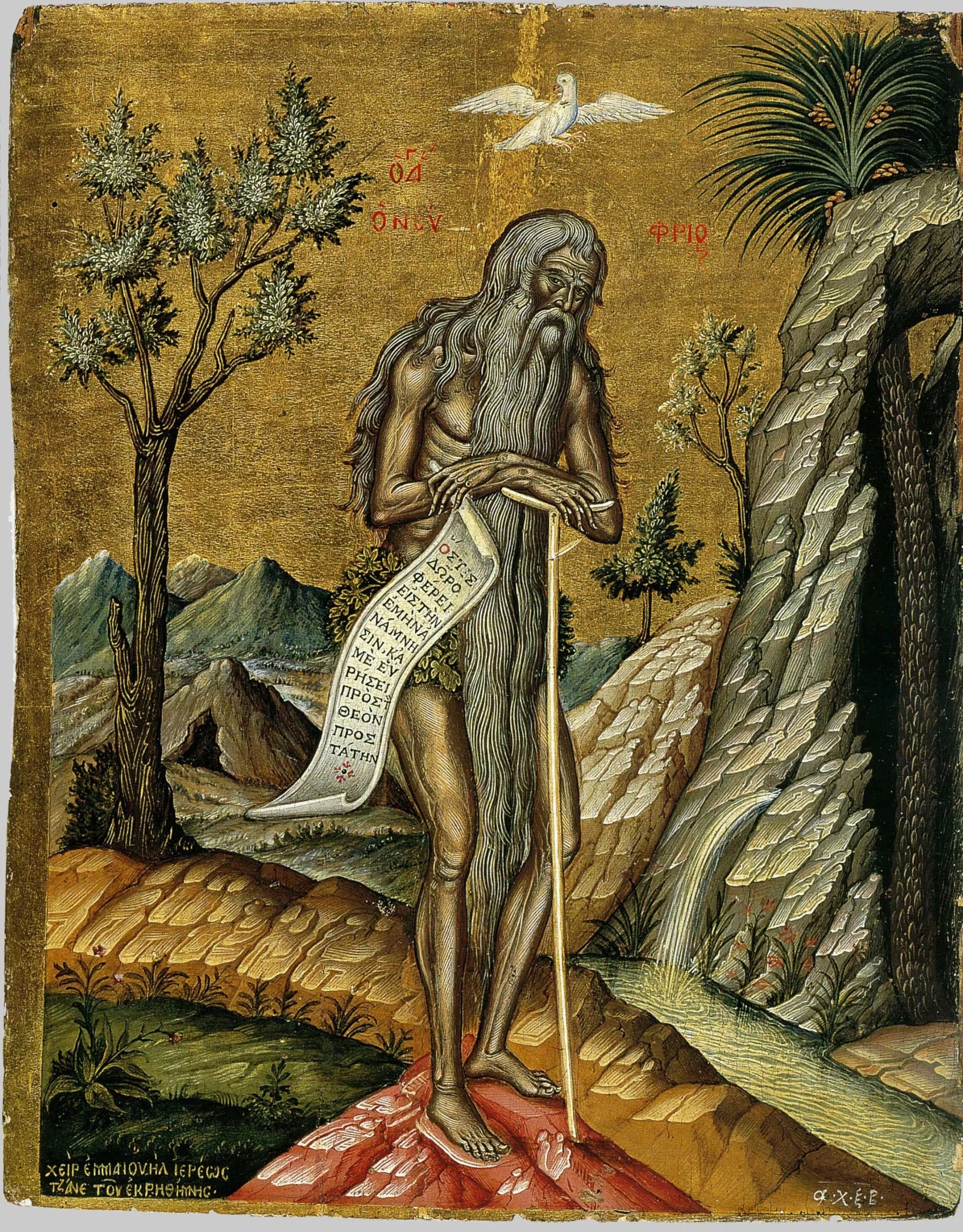
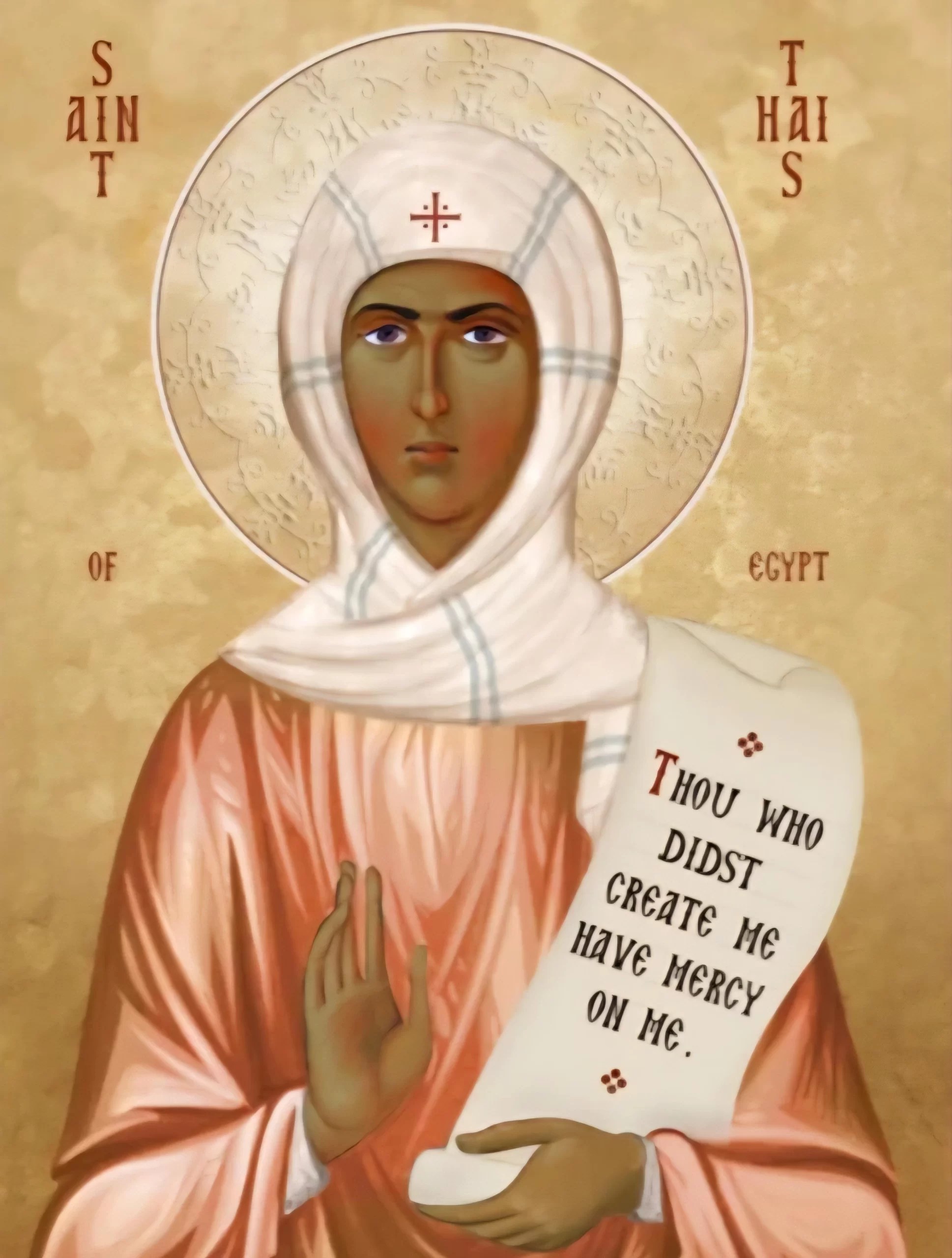
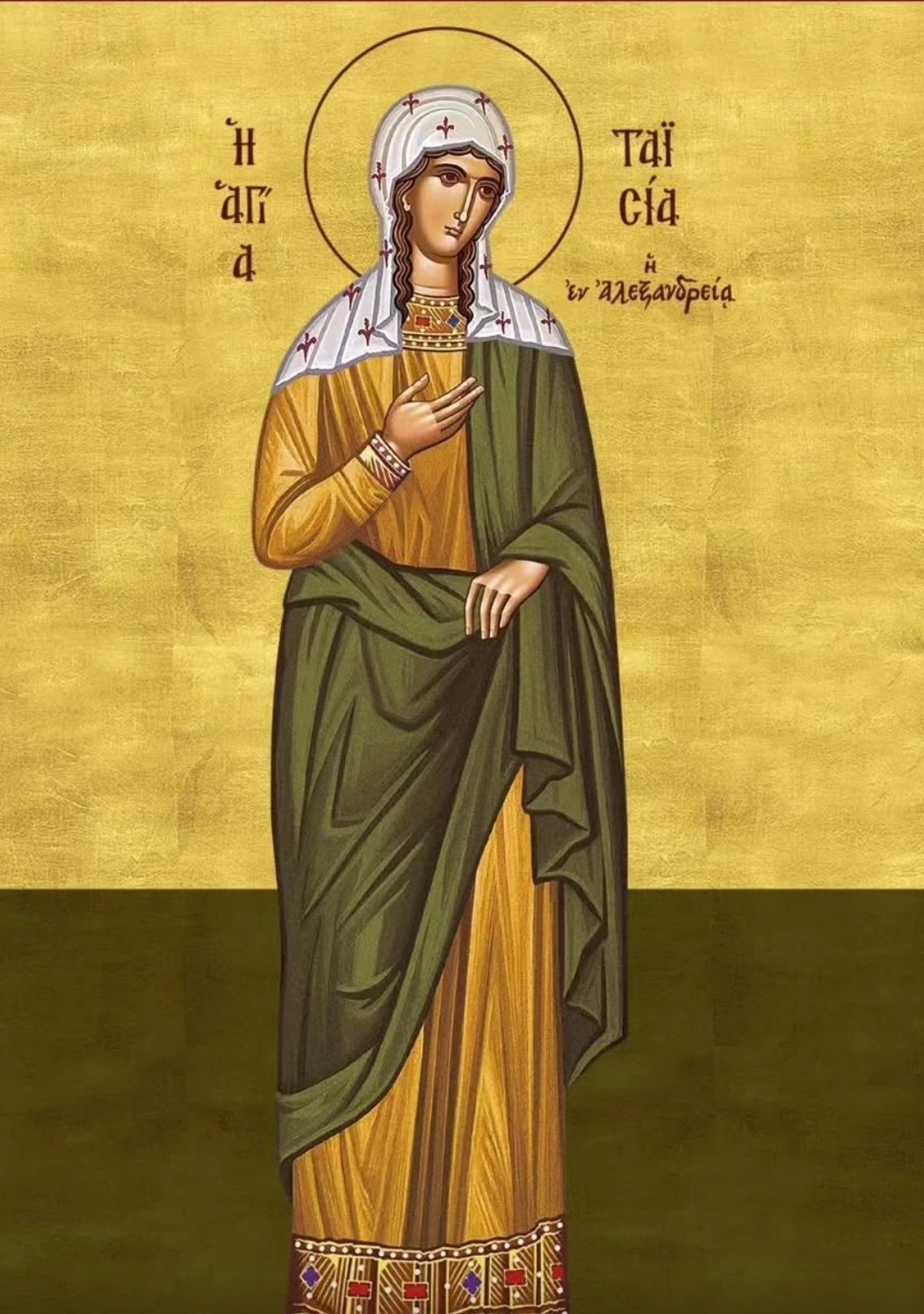
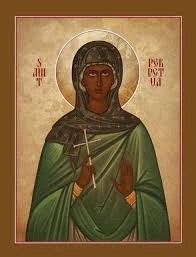
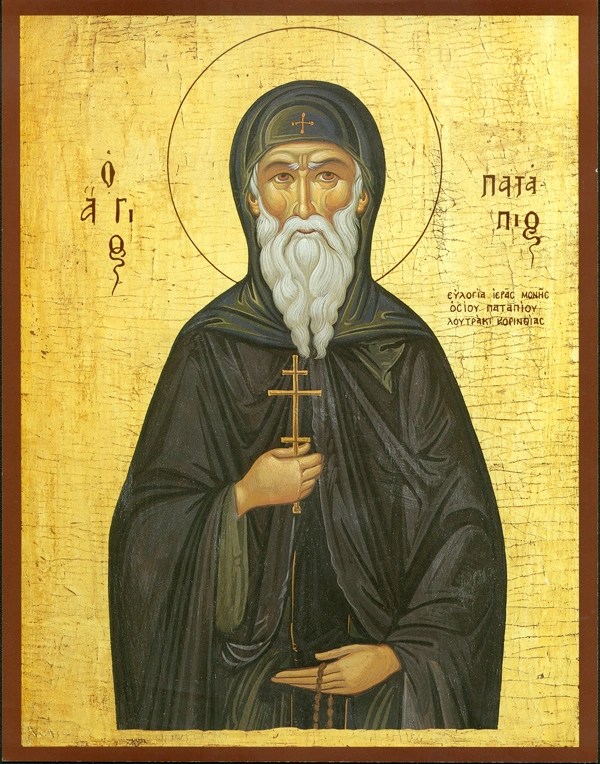
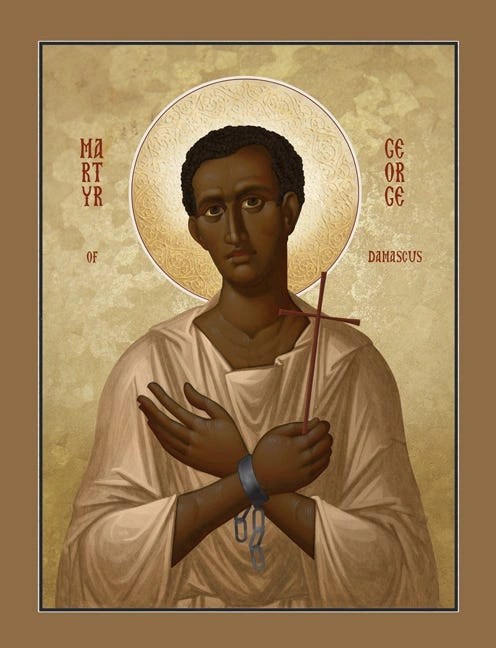
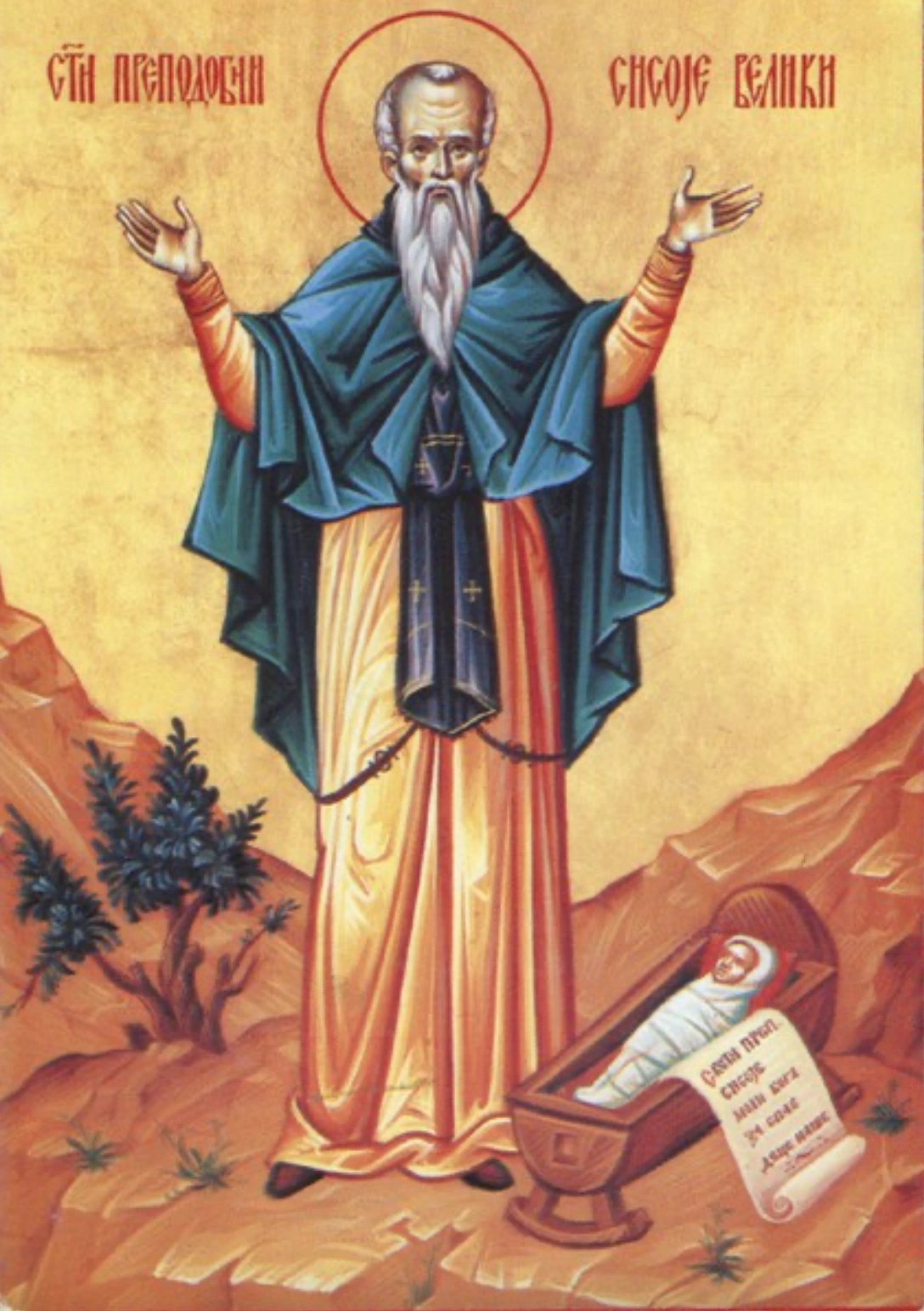
In the lives of the 22 saints above, you will see that those who died before 313 achieved sanctity through a violent martyrdom. Those who came afterwards achieved sanctity as monastics and penitents. St. Moses (†375) died a violent death, not as a result of Roman persecution, but from bandits. But the other monks and nuns represented here mostly died of illness, asceticism, and old age.
But speaking of martyrdom, during that same timeframe, a third way of giving one’s life for Christ also developed. This was the loving care of the sick and the dead during outbreaks of plague and “pestilence.” In Alexandria, during the Plague of Cyprian (261–263), priests, deacons, and “the best of the brethren” devoted themselves to the care of the sick and burying of the dead. They served pagan and Christian alike, in this way succumbing to illness and death themselves. Their archbishop, Dionysius, wrote that their deaths “seemed to lack nothing of martyrdom.” (The Roman Catholic Church celebrates the Martyrs in the Plague at Alexandria on February 28th.)
Can saints from so long ago be relevant to us today?
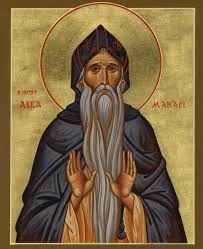
Going back to the monastic saints, the ones represented here were part of a foundational generation, a golden age of desert dwelling. All subsequent monastic life—it is not an exaggeration to say, Orthodox Christian life in general—is built on their contributions and patterns of life. St. John Cassian (commemorated on February 29th) was originally from Scythia on the Black Sea. He traveled to Egypt with his friend, Germanus, between 385–400. St. John interviewed several of the Desert Fathers and, based on this, he wrote his Institutes and Conferences. Coming back to the West, he built a monastery in Marseille founded on the teachings of the Egyptian Fathers. Because of St. John’s books, translated into many languages, we have direct access to the teaching of these saints today. But there were many direct contributions by the North African saints themselves.
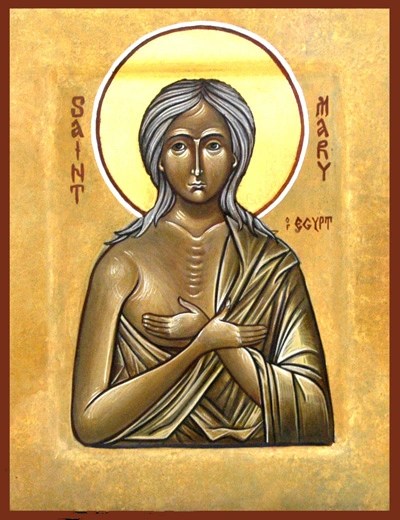
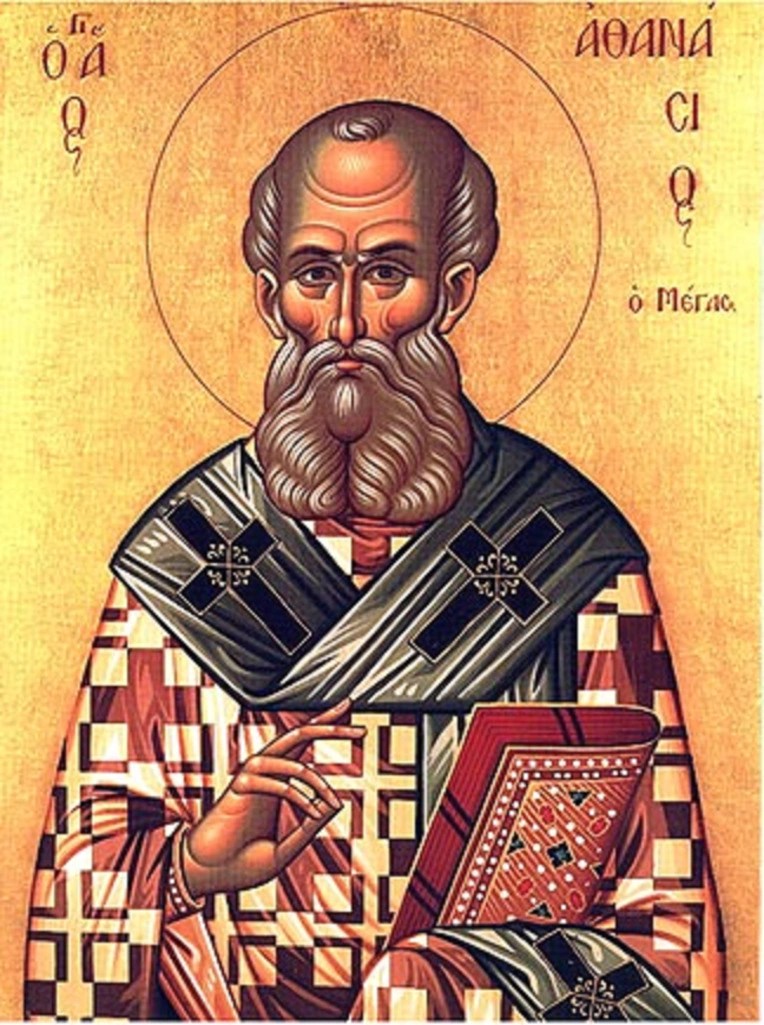
St. Athanasius helped to formulate the Nicene Creed or Symbol of Faith that we still recite in morning prayers, in the Divine Liturgy, and at other times. His Life of Anthony inspired the conversion of Blessed Augustine of Hippo, who also was African, and the foundation of Western theology (June 15, 430). St. Macarius the Great wrote prayers that are integrated into our morning and evening prayer offices. He also wrote the Fifty Spiritual Homilies that are in print in many languages today. The common or “cenobitic” life for monks, founded by St. Pachomius, became the inspiration for the Benedictine rule in the West. The fifth Sunday in Great Lent is devoted to St. Mary of Egypt. And her life, written down later by St. Sophrony of Jerusalem, is customarily read in its entirety during a special service earlier that week. Her life gives us a powerful model of repentance.
Some of St. Moses the Black’s sayings and deeds were recorded, still instructing us today in how to live God-pleasing lives. A number of Americans have taken his name in baptism or monasticism. And while the following may seem beyond belief to some, we have it from reliable witnesses: During the 1980s, St. Moses began appearing to people in California, in the vicinity of the St. Antony Coptic Monastery near Barstow. To one visionary, he revealed that he had come in response to the cries for help from the African American community.
What caused the golden age of desert dwelling to end?
From the early days, the desert settlements were vulnerable to disease outbreaks. St. Pachomius died between 346 and 348 during a plague that struck his monasteries. In one of these alone, 130 brethren and their leaders died from the illness. (The better-known Plague of Justinian did not strike until the 6th century.)
In the fifth century, the Roman Empire was destabilized by military conquest, famine, and more epidemic illnesses. Although some of this turmoil actually drove people into the desert to seek peace and stillness with God, as they had lost all hope in the present worldly order.
But eventually, even a hidden life in the desert ceased to be a safe haven. For example, there were ongoing raids on the monastic settlements by neighboring tribes who were looking for earthly treasures. In addition, in ad 398, at least 10,000 Fathers from the desert and caves of Sketis were martyred, their dwellings set alight by soldiers. This was not at the instigation of the state, but by command of Theophilus, the Patriarch of Alexandria. The pretext was to purge away the followers of certain theologian, Origen. But in fact, this heinous act was driven by the patriarch’s personal vendetta against the friends of his enemies. These 10,000 martyrs are commemorated on July 10th.
After the golden age of desert monasticism, whose saints are universally accepted in the Orthodox Church, two major events changed everything. First, following the Council of Chalcedon, the North African “Oriental” Churches separated from the rest of the “Eastern” Orthodox Churches over the proper understanding of the divine and human natures of Christ. The council took place in 451 ad. Then when the Islamic conquests began in Egypt in 639, the African Churches were further isolated, and the “Oriental” and “Eastern” Churches began to develop separate calendars of saints. Dialogue between these families of the Church is happening today, with the hope that the Eastern Church will eventually be able to recognize later African Saints.
Why are most of the Saints represented here associated with Egypt? Is Orthodox Christianity in Africa limited to North Africa?
Jomo Kenyatta and many of the Mau Mau freedom fighters were Orthodox Christian converts, belonging to a jurisdiction called the “African Orthodox Church.” As they fought against British colonial rule, they embraced the Orthodox Faith as one untainted by colonialism or slave trade. In fact, there has been a surge of growth of the Orthodox Church in African countries since the mid-20th century. We especially see this in Kenya, Tanzania, Uganda, and South Africa and, to a lesser extent, in Nigeria, the Central African Republic, and the Democratic Republic of Congo. The Oriental Orthodox Churches in Ethiopia and Eritrea are very ancient and historical, accounting for the great majority of African Orthodox Christians. However, the new congregations are primarily under the Greek Patriarchate of Alexandria or the Russian Orthodox Church. Some of the clergy and bishops of these Orthodox dioceses attended seminary abroad, including in the US, allowing for organic and mutually supportive relationships to develop between Orthodox Christians in Africa and in America.
Compiled by Popadija Anna Sanderson and Abbess Katherine Weston
January 19, 2026
Primary sources:
Gresham, Fr. Deacon John R., Jr. Become All Flame: Lent with African Saints. Sugar Land, TX: Park End Books, 2022.
Sanderson, Fr. Jerome and Carla Thomas, MD. Saints of Africa. Indianapolis, IN: CSB Publishing, 2006.
Bibliography:
Baring-Gould, S. Eastern Orthodox Saints. Selected from The Lives of the Saints, vols. 1 & 2, 1898 ed. Willits, CA: Eastern Orthodox Books, 1976.
Demetrius of Rostov, Saint. The Great Collection of The Lives of the Saints. Translated by Fr. Thomas Marretta. 12 vols. House Springs, MO: Chrysostom Press, 1997–2003.
Eusebius of Caesarea. Church History Book VII. Translated by Arthur Cushman McGiffert. In A Select Library of Nicene and Post-Nicene Fathers of the Christian Church, edited by Philip Schaff and Henry Wace, Series 2, Vol. 1. Grand Rapids: Wm. B. Eerdmans, 1979.
Makarios of Simonos Petra, Hieromonk. The Synaxarion: The Lives of the Saints of the Orthodox Church. Translated by Christopher Hookway and M. Maria Rule. 7 vols. Ormylia (Chalkidike): Holy Convent of the Annunciation of Our Lady, 1998–2008.
Velimirović, Nikolai, Bishop. The Prologue from Ochrid: Lives of the Saints and Homilies for Every Day of the Year. Translated by Mother Maria. 4 vols. Birmingham: Lazarica Press, 1985–1986.
https://mosestheblack.org/resources/